
Resin Safety: The Complete Guide for Mask Makers and Resin Crafters
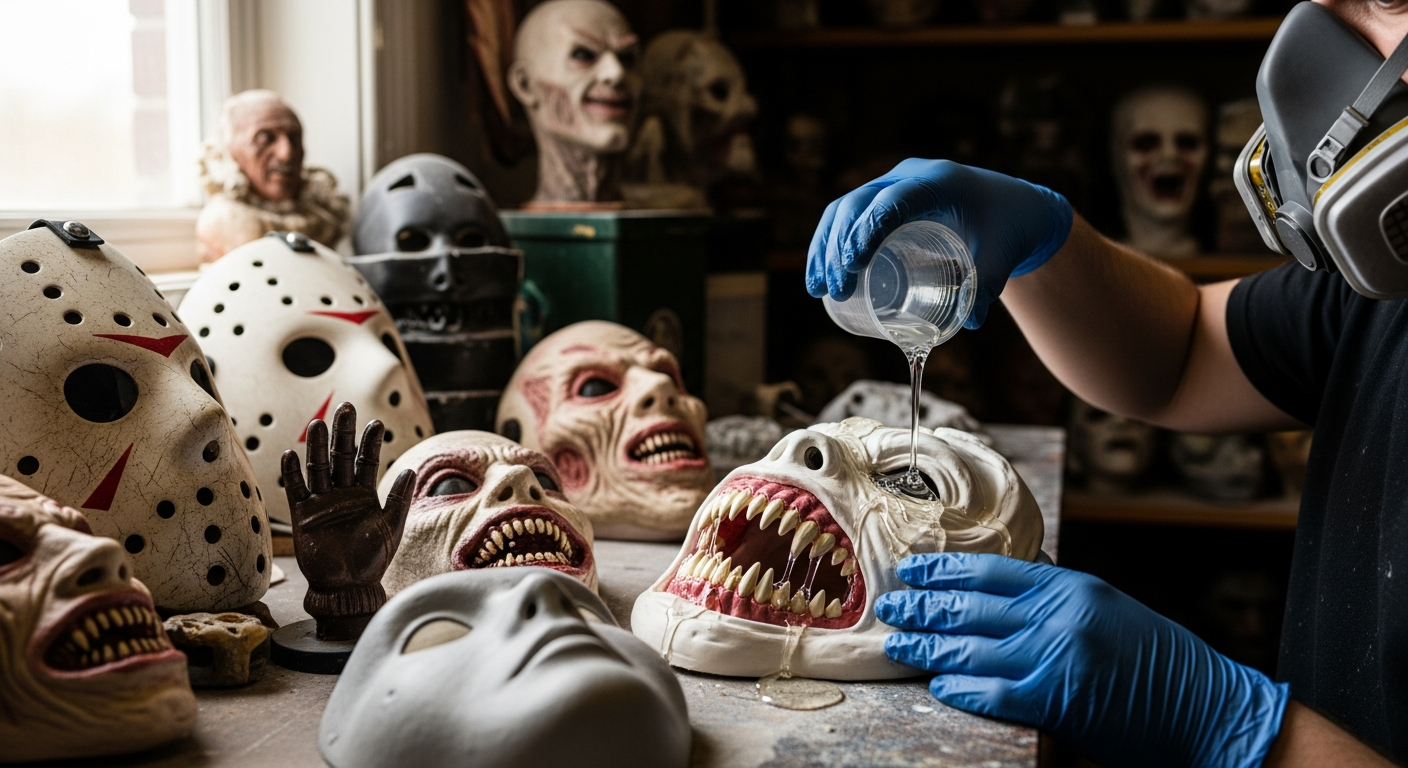
Resin is one of the most versatile materials in mask making and prop work, but it is not harmless. Whether you are casting your first piece or curing projects in a spare room, understanding the risks and the right protective gear is what keeps a fun hobby from becoming a health problem. This is the safety guide I wish every beginner read before opening their first kit.
Why resin safety matters
Uncured resin and its fumes can irritate the skin, eyes and lungs. Repeated exposure can lead to sensitisation, where your body reacts more strongly each time, and long term exposure carries more serious health risks. The danger is not always obvious because many resins have little smell, so it is easy to assume the air is fine when it is not.
The essential protective equipment
- Respirator. A proper respirator with organic vapour cartridges, not a paper dust mask. Dust masks do nothing against fumes.
- Gloves. Nitrile gloves, not latex, changed regularly. Resin can degrade the wrong glove material.
- Eye protection. Splashes happen. Safety glasses or goggles are cheap insurance.
- Skin cover. Long sleeves and an apron keep resin off your arms.
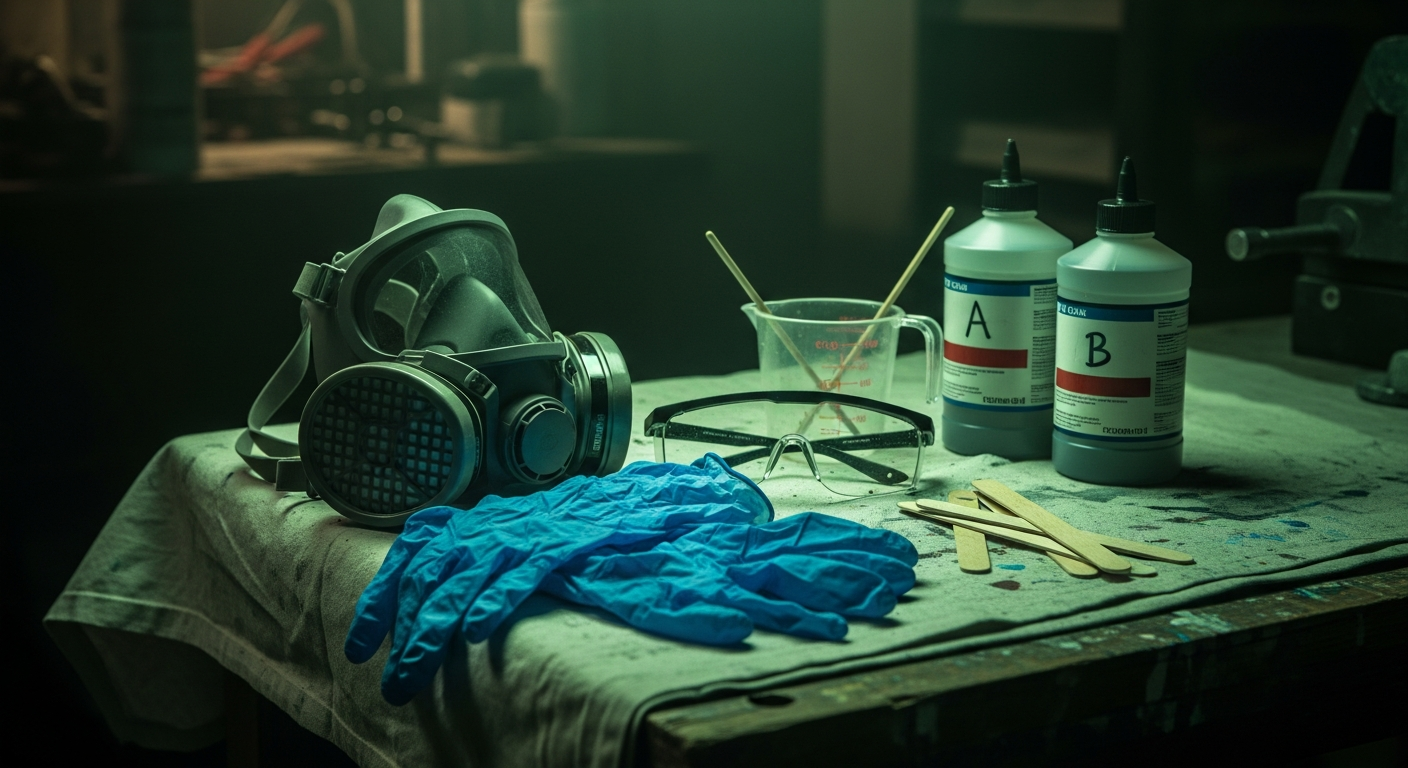
Ventilation is the part people skip
Good airflow is as important as a respirator. Work near an open window with a fan drawing air out of the room rather than blowing fumes around it. A respirator protects your lungs, but ventilation protects everyone else in the building and clears fumes faster.
Can you use resin indoors?
You can, carefully. If you do not have a garage or workshop, set up in a well ventilated room, keep the area away from kitchens and bedrooms, and never work where food is prepared. Households with pets, young children or anyone with respiratory conditions need to be especially careful, because they are far more sensitive to fumes than a healthy adult.
Curing safely indoors
Curing gives off fumes too. Cure pieces inside a lidded container or a dedicated curing box, keep that box in a ventilated space, and consider an air purifier with a carbon filter for extra peace of mind. Keep curing projects out of reach of pets and children and away from anywhere people sleep.
The truth about non-toxic claims
Be wary of the word non-toxic on resin packaging. It usually means the cured product is safe to handle, not that the liquid resin and fumes are harmless during mixing and curing. UV resin is often marketed as easy and clean, but it still needs gloves, ventilation and eye protection. Treat every resin as something that demands respect until proven otherwise.
A quick safe working checklist
- Respirator on before you open the bottle
- Nitrile gloves and eye protection every time
- Ventilate, and pull air out of the room
- Cover surfaces and have paper towels ready
- Cure in a contained, ventilated spot away from food, pets and sleeping areas
- Read the safety data sheet for your specific product
The bottom line
Resin is brilliant to work with once you respect it. Spend a little on a respirator, gloves and ventilation, build the habits early, and you can enjoy the craft for years without putting your health, or your household, at risk.
Related reading
- Mould-Making for Mask Makers: Plaster, Silicone and 3D-Printed Moulds
- Mask-Making Materials Explained: Latex vs Silicone vs Gelatin
Prefer to wear one rather than make one? Browse the collection or start a custom commission.
From our workshop
Prefer to buy rather than make? Each of these is genuinely handmade to order in our UK studio:
- Skull Mask: hand-painted resin skull half-mask
- Carrot Zombie Ornament: hand-cast resin zombie carrot ornament



Comments 0
Log in to leave a comment.