
Custom Made Realistic Masks: Master 7 Steps to Realism

Custom Made Realistic Masks: Master 7 Steps to Realism
The most captivating custom made realistic masks aren’t just crafted; they’re *birthed* from a fusion of artistic vision and hands-on mastery, capable of evoking genuine fear or profound wonder. In our workshop, we’ve found the true magic lies in making a mask look unsettling, a creation that invokes an emotional response from the moment someone lays eyes on it. This pursuit of the unnerving drives every sculpt we undertake.
Achieving this level of cinema-quality realism might seem daunting, but it’s an accessible goal, not an unattainable dream. As we always say, anyone can learn and do this; while it takes skill to perfect, there are enough tools and helpful people in the community to support anyone wanting to experiment. We frequently work with latex, valuing its ease of painting and casting, and its forgiveness when mistakes happen – a crucial lesson learned from moments like forgetting release agent on a plaster mould, which thankfully, we could just wash off! However, when pushing for the absolute pinnacle of realism, silicone definitely offers the superior finished result, even with its higher cost and the need for meticulous organization after a few Part A and Part B resin mix-ups!
This comprehensive guide will equip you with our proven, end-to-end workflow, from selecting the right mask making materials and mastering sculpting techniques that breathe hyperrealistic life into features, to creating precision moulds and applying advanced finishing touches like intricate painting and hair punching. Prepare to transform your artistic vision into truly extraordinary hyperrealistic silicone masks that captivate and astound.
Embarking on the journey of creating custom made realistic masks demands a blend of artistic vision, technical skill, and a deep understanding of materials. This guide distills the intricate process into essential, actionable steps, empowering you to achieve stunning, lifelike results. Below are the core insights and techniques you’ll master on your path to hyperrealism.
- Select Your Foundation Materials: Gain a comprehensive understanding of the properties and applications of key materials like silicone, latex, and resins, crucial for laying the groundwork of your realistic mask.
- Master the End-to-End Workflow: Navigate the entire custom mask creation process, from initial conceptualization and detailed design to the final, polished product, ensuring a streamlined and effective workflow.
- Sculpt Hyperrealistic Features: Develop advanced sculpting techniques, focusing on anatomical precision, intricate textures, and subtle nuances that breathe lifelike detail into your mask.
- Craft Precision Moulds: Learn diverse and effective mould-making strategies essential for accurately capturing and replicating the intricate details of your sculpted masterpiece.
- Perfect Casting & Finishing Touches: Employ expert casting methods and meticulous finishing techniques, including sophisticated painting, airbrushing, and realistic hair punching, to bring your mask to vivid life.
- Utilize Essential Tools & Equipment: Discover and familiarize yourself with the indispensable tools and specialized equipment that streamline and enhance every stage of the custom mask creation process.
- Infuse Emotion & Movement: Explore advanced methods for incorporating dynamic expression and subtle movement, transforming your mask from a static representation into a truly animated and lifelike character.
- Troubleshoot Common Challenges: Equip yourself with practical troubleshooting tactics to effectively overcome typical obstacles and ensure smooth progress toward a flawless custom realistic mask.
- Unlock Cinema-Quality Realism: Realize that achieving professional-grade, hyperrealistic mask results is not an unattainable dream but an accessible goal through structured learning and dedicated application of proven techniques.
From understanding the intricacies of mask making materials to mastering advanced sculpting techniques, this guide offers a comprehensive roadmap. Delve deeper into the subsequent sections to unlock the secrets behind creating truly extraordinary hyperrealistic silicone masks that captivate and astound.
Step 1: Laying the Foundation – Materials, Concept, and Workflow for Custom Masks
Creating truly captivating custom made realistic masks begins long before the sculpting tools even come out. It starts with a deep understanding of your materials, a clear concept, and a meticulously planned workflow. In our workshop, we’ve found that success hinges on these foundational elements, ensuring that every detail contributes to the mask’s overall impact and realism.
We approach each new project with an eye for bringing visions to life, whether it’s a grotesque horror creature or a subtle human likeness. Demystifying this intricate process is key, as we believe anyone can learn to craft amazing custom made realistic masks with the right guidance.
Understanding Realistic Mask Materials: Silicone, Latex, and Resins
-
Exploring Silicone for Hyperrealistic Silicone Masks
For us, silicone often represents the pinnacle of realism in mask making. Its incredible flexibility, translucency, and skin-like feel make it ideal for hyperrealistic silicone masks. Silicone holds intricate details exceptionally well, providing an unparalleled finished result that truly makes our custom made realistic masks stand out.
When working with silicone, we primarily choose between platinum cure and tin cure varieties. Platinum cure silicones offer superior longevity and strength, making them perfect for durable custom silicone masks, while tin cure options can be more forgiving for beginners but may suffer from shrinkage over time.
-
The Versatility of Latex for Realistic Cosplay Masks and Special Effects
While silicone offers superior realism, we use latex more than anything else in our studio, especially when starting a new design or for projects requiring budget-friendly options. It’s easier to work with in regards to painting and casting, and also less expensive if you mess up compared to silicone. This makes it an excellent material for realistic cosplay masks and various special effects applications.
Latex provides great flexibility and is very forgiving for beginners learning the ropes of creating custom made realistic masks. For specific projects like realistic latex Halloween masks or early prototypes, we often recommend starting with latex to gain confidence before moving to more advanced materials. It truly is a versatile material for many types of custom made realistic masks.
-
Resins and Other Foundation Materials for Structural Support
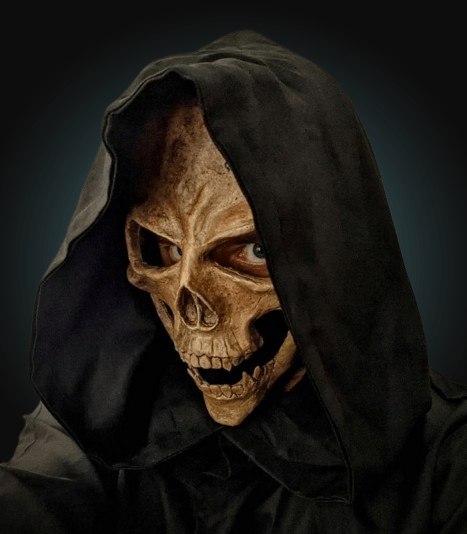
Beyond the primary skin-like materials, resins play a crucial role in providing structural support for our custom made realistic masks. We use resins for rigid components like teeth, eye structures, or sometimes a rigid backing for certain mask designs, such as the Skull Halloween Mask. These materials ensure that the mask maintains its intended shape and provides a solid foundation for intricate details.
Additionally, essential mask making materials include various sculpting clays, plasters for mould making, and, crucially, a range of release agents. These foundational elements are indispensable for every stage of creating custom made realistic masks, from the initial sculpt to the final cast.
Mastering the End-to-End Workflow: From Concept to Finished Product
-
Conceptualization and Design for Realistic Human Face Masks
Every exceptional custom made realistic mask begins with a compelling concept. In our creative process, we draw inspiration from diverse sources, developing detailed characters and gathering extensive reference material. This initial phase is crucial for establishing the personality and story behind each of our realistic human face masks.
Detailed sketches and digital sculpts are indispensable for planning our custom made realistic masks, allowing us to visualize the final product and resolve design challenges early on. This meticulous preparation ensures that our vision translates accurately into the three-dimensional form, giving each mask its unique presence.
-
Workflow Stages: A Step-by-Step Realistic Mask Tutorial Overview
Our comprehensive workflow for crafting custom made realistic masks involves several distinct stages: sculpting, mould making, casting, and finishing. Each step requires precision and a deep understanding of the materials and techniques involved. We view this process as a journey, with each stage building upon the last to achieve unparalleled realism.
Many aspiring makers ask, “How long does it take to create a realistic custom mask?” The answer varies significantly depending on complexity, but it’s a commitment. For example, we once crafted 20 custom made realistic masks from sculpt to finished product in just two weeks for a promotion for the game Phasmophobia, a testament to efficiency and dedication under pressure.
Step 2: Sculpting Hyperrealistic Features for Unforgettable Masks
Sculpting is where the true artistry of creating custom made realistic masks comes to life. It’s a meticulous process of shaping clay to capture not just a likeness, but also emotion and character. We believe that an understanding of anatomy and an eye for unsettling detail are paramount.
Achieving hyperrealistic silicone masks demands a blend of technical skill and artistic intuition. This stage sets the foundation for all subsequent steps, directly influencing the final appearance and impact of your custom made realistic masks.
Anatomical Precision: The Core of Realistic Mask Sculpting Techniques
-
Understanding Facial Anatomy for Realistic Human Face Masks
To sculpt truly believable realistic human face masks, a thorough grasp of facial anatomy is non-negotiable. We meticulously study key anatomical landmarks, understanding how bone structure and muscle groups dictate expression and form. This foundational knowledge ensures that our custom made realistic masks possess a convincing, underlying structure.
We employ techniques that focus on sculpting proportional and believable facial structures, ensuring every curve and plane aligns with natural human physiology. This attention to detail is essential for creating custom silicone masks that are genuinely lifelike and resonate with the viewer. For a deeper dive into human anatomy, we often reference authoritative sources such as Gray’s Anatomy.
-
Sculpting Different Features: Eyes, Nose, Mouth, and Ears
Each facial feature demands a detailed approach to achieve maximum realism in our custom made realistic masks. We focus on subtle nuances for eyes, capturing the slight tension around the lids and the precise angle of the brow. Similarly, the nose and mouth require careful consideration of their interplay with the surrounding musculature.
Adding internal structures for eyes and teeth during the sculpting phase significantly enhances depth and realism, making the mask feel more substantial and organic. When sculpting or 3D modeling a mask, our favorite thing to do is make it look unsettling, as invoking an emotional response of fear is definitely the best part for us. This focus on impact elevates our special effects masks beyond mere costume pieces.
Breathing Life into Surfaces: Texture, Nuance, and Expression
-
Creating Convincing Skin Texture for Hyperrealistic Silicone Masks
The texture of a mask’s surface is paramount for achieving realism, especially for hyperrealistic silicone masks. We meticulously replicate pores, fine wrinkles, and subtle skin imperfections, ensuring that the surface isn’t uniformly smooth or artificial. This nuanced approach helps to break up light and create a more organic appearance, crucial for custom made realistic masks.
In our workshop, we use specialized sculpting tools and techniques to press, stipple, and blend textures, creating natural-looking surfaces that mimic real skin. These subtle details, though time-consuming, are what truly elevate a mask from good to exceptional, adding layers of authenticity to our custom made realistic masks.
-
Infusing Emotion and Movement into Your Sculpt
A truly impactful mask captures more than just a static face; it conveys emotion and implies movement. We focus on capturing dynamic expression through subtle shifts in facial muscles, allowing the mask to tell a story. This attention to emotional nuance is key for engaging special effects masks and realistic cosplay masks.
We consistently pre-visualize how the custom made realistic mask will look and move when worn, considering how the underlying features will interact with the wearer’s face. This foresight ensures that the finished product not only looks realistic but also performs realistically in action, providing a compelling portrayal for its intended purpose.
Step 3: Crafting Precision Moulds for Intricate Details
Once a sculpt is complete, the next critical step for any custom made realistic mask is creating a precision mould. This stage is where the delicate details of your artwork are translated into a robust form, ready for casting. A high-quality mould is absolutely essential, as any imperfection here will be magnified in the final cast.
In our experience, mastering mould making is an art in itself, requiring meticulous planning and execution to capture every nuance of your hyperrealistic silicone masks. This ensures that the fidelity of the sculpt is perfectly preserved for future production.
Mould Making Strategies for Detailed and Complex Masks
-
Introduction to Mould Making Guide for Mask Makers
The mould is the heart of repetitive mask production, and its critical role in capturing the fidelity of your sculpt cannot be overstated. A well-made mould ensures that every intricate detail, every pore, and every subtle wrinkle from your original sculpt is accurately reproduced in subsequent casts. This precision is vital for crafting truly custom made realistic masks.
Many aspiring makers wonder, “What kind of molds are used for realistic masks?” We primarily utilize multi-part rigid moulds, often made from plaster or resin shells, backed by flexible silicone or latex skins. This combination allows us to capture extreme detail while also facilitating easy de-moulding of the delicate custom silicone masks.
-
Matrix Moulds vs. Brush-On Blanket Moulds
When approaching a new sculpt for a custom made realistic mask, we carefully consider whether to use a matrix mould or a brush-on blanket mould. Matrix moulds, often composed of a rigid shell with a flexible face, are excellent for highly detailed and complex sculpts, especially those that require many undercuts. They provide robust support and accurate registration for multi-part casting.
Brush-on blanket moulds, on the other hand, involve applying layers of silicone directly onto the sculpt, backed by a rigid mother mould. This method is often preferred for larger, less complex forms or when we need to minimize material usage. The step-by-step process for creating multi-part moulds involves precise keying and careful layering to ensure perfect alignment and flawless reproduction of intricate sculpts for our hyperrealistic silicone masks.
Ensuring Accuracy and Durability in Your Moulds
-
Key Materials for Professional Moulds
Selecting the right materials is paramount for creating professional-grade moulds that accurately reproduce our custom made realistic masks. We typically use high-quality mould-making silicones for the flexible skin layer due to their exceptional detail capture and durability. For the rigid mother mould, plaster bandages or epoxy resins are our go-to choices, providing the necessary structural integrity.
Understanding release agents and their crucial application is another non-negotiable step. Failing to apply a proper release agent, as we once learned the hard way when starting a plaster mould without it, can lead to materials bonding permanently. Luckily, in that instance, the second half hadn’t set, allowing us to wash it all off with the hose!
-
Troubleshooting Common Challenges in Mould Making
Even with careful planning, challenges can arise in mould making. We’ve certainly faced issues like undercuts causing tearing, air bubbles entrapped in the silicone, or material curing problems. Addressing these quickly is vital to ensure a flawless mould for custom made realistic masks. Techniques like strategically cutting the mould or using additional shims can resolve undercut issues.
To prevent air bubbles, we use vacuum degassing for silicone, and for plaster moulds, we ensure a thorough mixing process to eliminate trapped air. Tips for maintaining and storing your moulds, such as cleaning them thoroughly after use and storing them in a temperate environment, will extend their lifespan for future reproductions, protecting your investment in creating multiple custom made realistic masks.
Step 4: Expert Casting and De-Moulding Your Mask Masterpiece
With a meticulously crafted mould ready, the next exciting phase is casting your custom made realistic masks. This is where the mask truly begins to take its physical form. The casting process demands precision and attention to detail to ensure that every nuance of your sculpt is perfectly replicated.
From preparing the mould to the careful de-moulding, each step is crucial for producing flawless hyperrealistic silicone masks that truly capture your original artistic vision.
Mastering Casting Methods for Custom Silicone Masks
-
Preparing Your Mould for Casting
Before any silicone casting begins, thorough mould preparation is essential. We meticulously clean and dry our moulds, ensuring there are no dust particles or moisture that could compromise the cast. Next, we apply appropriate release agents, which are vital for preventing the casting material from bonding to the mould.
For multi-piece moulds, ensuring proper alignment is critical. We use registration keys and often double-check the fit before pouring, guaranteeing a seamless transition between mould sections and preventing unsightly seams on our custom silicone masks.
-
Pouring Techniques for Hyperrealistic Silicone Masks
Achieving bubble-free casts, especially for hyperrealistic silicone masks, is a hallmark of professional work. In our studio, we rely heavily on vacuum degassing the liquid silicone before pouring, which draws out any trapped air. For even higher quality, we use a pressure pot during curing to compress any remaining micro-bubbles, resulting in incredibly smooth and detailed custom silicone masks.
Controlling pour rates and minimizing air entrapment during the actual pour are also crucial. We pour slowly and steadily from a low height, allowing the silicone to flow into all the intricate details without trapping air. This careful approach ensures pristine custom made realistic masks every time.
Careful De-Moulding and Initial Clean-Up
-
The Art of De-Moulding Without Damage
De-moulding is a delicate art form that requires patience and a gentle touch to avoid damaging your newly cast mask. We employ specific techniques for carefully separating the mould pieces, gradually working our way around the edges. This process minimizes stress on the delicate silicone, preventing tears or distortions in the custom made realistic mask.
Addressing common issues like sticking or tearing during de-moulding often comes down to proper release agent application and allowing the material to fully cure. If a cast does stick, we carefully assess the situation, sometimes gently wiggling the mould to encourage separation, rather than forcing it, which could irreparably damage the custom silicone masks.
-
Trimming and Prepping the Raw Cast
Once de-moulded, the raw cast of your custom made realistic mask will inevitably have some flashing: thin excess material around the edges. We carefully trim this away using sharp scissors or scalpels, striving for clean, seamless edges. This initial clean-up is vital for the mask’s aesthetic and comfort.
Following trimming, we conduct a thorough initial inspection for any imperfections, such as small air bubbles or seam lines. We then plan for repairs or further finishing work, knowing that these early steps lay the groundwork for the exceptional detail and realism found in our completed hyperrealistic silicone masks.
Step 5: Bringing Your Mask to Vivid Life with Finishing Touches
The true magic of transforming a raw cast into a breathtaking piece of mask art happens in the finishing stages. This is where realistic mask painting and intricate detailing breathe vivid life into your custom made realistic masks. We often spend as much time on finishing as on the sculpting and moulding, recognizing its immense impact on the final product.
From the subtle nuances of skin tone to the meticulous placement of individual hairs, these final touches elevate a mask to unparalleled levels of realism and character.
Advanced Painting Techniques for Realistic Mask Painting
-
Color Theory and Skin Tones for Realistic Human Face Masks
Achieving convincing skin tones for realistic human face masks requires a deep understanding of color theory. We custom mix our colors, often using multiple subtle shades, to match diverse skin tones and character requirements. The goal is to avoid a flat, monochromatic appearance, which immediately breaks the illusion of a custom made realistic mask.
Understanding translucency and sub-surface scattering in silicone masks is also crucial. We use highly pigmented yet sheer silicone paints, allowing light to interact with the underlying layers, mimicking the natural look of skin. This technique adds incredible depth and realism to every hyperrealistic silicone mask we create.
-
Airbrushing and Hand Painting for Depth and Detail
For most of our custom made realistic masks, we employ a combination of airbrushing and hand painting. Airbrushing allows us to lay down smooth, even base coats and subtle gradients, building up layers of color for realistic depth and pigmentation. This is especially effective for creating the illusion of complexions that truly seem to glow from within.
Following airbrushing, we use fine brushes for intricate details like veins, freckles, blemishes, and subtle textural variations. This precise hand-painting brings out the character and uniqueness of each custom made realistic mask, ensuring no two are exactly alike.
-
Weathering and Aging Effects for Horror Mask Creation
For horror mask creation, weathering and aging effects are paramount. We utilize a range of techniques to create realistic dirt, grime, dried blood, and scars, tailoring them to the specific character’s backstory. This process is essential for achieving the unsettling realism seen in our realistic zombie masks and other frightful creations.
Once satisfied, we apply a sealant to protect the painted finish, ensuring the longevity and durability of our custom made realistic masks. This final protective layer safeguards the intricate artwork from wear and tear, keeping the mask looking pristine for years to come.
Hair Punching and Detailing for Unrivaled Realism
-
The Art of Hair Punching for Hyperrealistic Silicone Masks
Hair punching is a highly specialized, painstaking technique that delivers unrivaled realism for our hyperrealistic silicone masks. We carefully select appropriate hair types, often using yak hair, human hair, or high-quality synthetics, depending on the desired effect for wigs, eyebrows, and beards. Each strand is individually punched into the silicone, mimicking natural hair growth patterns.
This meticulous process creates incredibly natural hairlines and growth direction, making it virtually impossible to distinguish the punched hair from real hair. The dedication required for hair punching is a testament to our commitment to crafting the most convincing custom made realistic masks possible.
-
Adding Eyebrows, Lashes, and Other Fine Details
Beyond hair punching for larger areas, we meticulously attach and style individual eyebrows and lashes, paying close attention to their natural curvature and density. These seemingly small details contribute significantly to the mask’s overall realism and expression, defining the character’s personality. We understand that these minute elements can make or break the illusion for custom made realistic masks.
Incorporating glass eyes, subtle prosthetics, or other accessories further elevates realism, bringing the mask to a cinematic standard. Each additional element is chosen and integrated with precision, ensuring that every component works in harmony to create a truly captivating and lifelike custom made realistic mask.
Step 6: Essential Tools and Advanced Techniques for Dynamic Masks
Behind every exceptional custom made realistic mask lies a carefully selected arsenal of tools and specialized equipment. Just as important are the advanced techniques that allow us to infuse dynamism and lifelike expression into our creations. We’ve honed our approach over years, understanding that the right tools, coupled with expertise, unlock unparalleled realism.
In this section, we’ll explore the indispensable items that facilitate our craft and the methods we use to ensure our special effects masks are not just realistic, but also dynamic and comfortable to wear.
Utilizing Indispensable Tools and Specialized Equipment
-
Core Mask Making Tools for Every Stage
Our workshop is equipped with a comprehensive list of mask making tools, catering to every stage of creation. For sculpting, this ranges from basic loop tools for removing bulk clay to specialized texture stamps for fine skin details. These tools are extensions of our hands, allowing for precise control and intricate detailing on every custom made realistic mask.
Essential mould making and casting equipment includes accurate digital scales for mixing materials, a variety of mixing containers, spatulas for blending, and, crucially, a full range of safety gear. We prioritize safety, as many of these materials require careful handling, ensuring our team is protected while producing stunning hyperrealistic silicone masks.
-
Advanced Equipment for Cinema-Quality Realism
To achieve cinema-quality realism in our custom made realistic masks, we frequently leverage advanced equipment. The benefits of vacuum degassers and pressure pots for professional results cannot be overstated; they eliminate air bubbles, leading to flawlessly smooth casts. This investment is crucial for producing the high-end custom silicone masks our clients expect.
For sophisticated mask painting effects, high-quality airbrush kits and compressors are indispensable. They allow us to apply fine, translucent layers of paint, building up realistic skin tones and intricate patterns that are virtually impossible to achieve with traditional brushes alone. These tools empower us to create truly exceptional custom made realistic masks.
Infusing Emotion and Movement into Worn Masks
-
Designing for Dynamic Expression and Wearability
Beyond static realism, we pride ourselves on designing custom made realistic masks that convey dynamic expression when worn. This involves careful consideration of the wearer’s facial movements and how they translate to the mask’s underlying structure. Our goal is to ensure the mask moves naturally with the performer, enhancing the illusion rather than hindering it.
We often incorporate flexible zones and internal mechanisms to allow for subtle animations in our special effects masks. These techniques ensure that the mask isn’t just a static prop, but an expressive piece that truly comes alive, capturing the attention and imagination of any audience.
-
Fitting and Comfort for Custom Made Realistic Masks
Comfort and fit are paramount for custom made realistic masks, especially for extended wear. We meticulously customize the interior of each mask, often using foam padding and strategically placed straps, to ensure a snug and comfortable fit that minimizes shifting. A poorly fitting mask will not only be uncomfortable but also detract from the realistic illusion.
Ensuring proper ventilation and visibility is equally important. We integrate subtle vents and carefully shape eyeholes to provide adequate airflow and an unobstructed view for the wearer. This holistic approach ensures that our custom made realistic masks are not only stunning to behold but also practical and enjoyable to wear for any occasion.
Step 7: Overcoming Challenges and Achieving Unrivaled Realism
The journey of creating custom made realistic masks is rarely without its hurdles. From material inconsistencies to intricate finishing flaws, challenges are an inherent part of the creative process. In our workshop, we’ve learned that anticipating and effectively troubleshooting these issues is key to achieving unrivaled realism and pushing the boundaries of mask art.
This final section shares our insights into overcoming common obstacles and offers a glimpse into the continuous learning required to master the craft of handmade horror mask creation and beyond.
Troubleshooting Common Challenges in Realistic Mask Making
-
Addressing Material Issues: Bubbles, Curing, and Consistency
Working with materials like silicone and latex can present various challenges, such as unexpected bubbles, incomplete cures, or inconsistent material consistency. We’ve developed practical solutions over time, like precise measurement of Part A and Part B of resins, a lesson we learned after mixing them up a few times, which made us become more organized with storage in our workshop.
To prevent issues like incomplete cures or sticky surfaces, strict adherence to mixing ratios and temperature guidelines is vital. We also employ careful mixing techniques to avoid air entrapment, which can cause inconsistent textures in our finished custom made realistic masks.
-
Fixing Sculpting and Moulding Imperfections
Minor damage to a sculpt can happen, but most imperfections can be repaired before moulding. We use various sculpting tools to smooth out unintended marks or rebuild small sections. This meticulous pre-moulding repair ensures that our final custom made realistic masks are free of unwanted flaws.
Strategies for addressing mould defects are equally important. If a mould has a small tear or an unwanted bubble, we carefully patch it with compatible material, ensuring it doesn’t transfer to the final cast. A flawless mould is non-negotiable for producing hyperrealistic silicone masks.
-
Correcting Finishing Flaws: Painting Errors and Hair Issues
Even the most experienced mask makers can encounter finishing flaws. For painting errors, especially on silicone masks, we often blend out mistakes using thin layers of clear silicone or very diluted paint, effectively re-doing intricate details without stripping the entire mask. Patience is key when correcting these issues to maintain the realism of our custom made realistic masks.
Troubleshooting hair punching problems involves carefully removing misplaced hairs and re-punching them, always striving for a natural look. Ensuring proper hair selection and density is crucial for achieving seamless integration and preventing a sparse or unnatural appearance on our custom made realistic masks.
Unlocking Cinema-Quality Realism: Your Path to Mastery
-
Learning from Experience: The Journey of a Master Mask Maker
Our journey in creating custom made realistic masks has been defined by continuous learning and embracing experimentation. We truly believe in viewing “mistakes” not as failures, but as invaluable learning opportunities. This mindset fosters innovation and resilience, essential for anyone aspiring to master this complex craft.
The importance of practice, patience, and continuous skill development is something we consistently emphasize, as highlighted in Devils Dreamworld tutorials. As we’ve found, anyone can learn and do this; while it does take some skill to perfect it, there are enough tools and helpful people in the community that gives anyone what they need to experiment for themselves. It’s a rewarding journey of constant refinement.
-
Building Your Portfolio and Expanding Your Craft
For aspiring mask makers, building a strong portfolio is essential for showcasing your mask art. We encourage documenting your projects, from initial sculpts to finished custom made realistic masks, like our Skull Half Mask. This visual record not only demonstrates your capabilities but also tracks your artistic growth.
We also advocate for exploring further advanced mask making techniques and specialized effects such as prosthetic makeup and animatronics. The world of special effects is vast, and there’s always something new to learn and integrate into your repertoire, allowing you to continually push the boundaries of what’s possible with custom made realistic masks.
The Art of Illusion: Mastering Realistic Mask Creation
The journey of crafting custom made realistic masks is a profound blend of artistic vision, scientific precision, and tireless dedication. From the initial spark of an idea to the final, unsettling gaze of a finished piece, every step demands meticulous attention. In our workshop at Devil’s Dreamworld, we’ve come to understand that this intricate process is more than just manufacturing; it’s about breathing life into inanimate materials, creating illusions that captivate, disturb, and inspire. This comprehensive guide has laid out the foundations, techniques, and insights necessary to embark on or advance your own mask-making odyssey. Now, as we draw to a close, let’s consolidate the key takeaways that truly define mastery in this unique craft.
Foundations and Flexibility: Choosing Your Canvas
The choice of materials forms the very bedrock of a mask’s realism and durability. We’ve seen how essential it is to understand the strengths and limitations of each. For us, silicone stands as the pinnacle for hyperrealistic silicone masks, offering unparalleled flexibility, translucency, and skin-like feel that captures the most intricate details. Platinum cure silicones, in particular, provide superior longevity, making them ideal for the most durable creations. However, we’ve found that latex is an indispensable ally in our studio, especially when starting a new design or for projects where budget and ease of use are paramount. It’s significantly easier to work with regarding painting and casting, and also less expensive if you mess up compared to silicone. While silicone ultimately offers a superior finished result in terms of realism, the versatility and forgiving nature of latex make it an excellent material for realistic cosplay masks and prototypes, allowing aspiring makers to gain confidence before delving into more advanced materials. Beyond these, resins provide crucial structural support for rigid components like teeth or the internal framework of our Skull Halloween Mask, ensuring the mask maintains its intended form.
Sculpting Soul and Emotion: The Heart of the Mask
Sculpting is where the mask’s character truly emerges. Our approach emphasizes an unwavering commitment to anatomical precision, meticulously studying facial structures to ensure every curve and plane aligns with natural human physiology. It’s this foundational knowledge that allows us to create truly believable realistic human face masks. But beyond mere likeness, we strive to infuse each sculpt with emotion and an implied narrative. When sculpting or 3D modeling a mask, our favorite thing to do is make it look unsettling; invoking an emotional response of fear is definitely the best part for us. This involves creating convincing skin textures – pores, fine wrinkles, and subtle imperfections – that break up light and create an organic, lifelike surface. Pre-visualizing how the mask will move and interact with the wearer’s face ensures that the finished product not only looks realistic but also performs realistically in action, turning a static sculpt into a dynamic piece of mask art.
Precision Moulds and Flawless Casts: Reproducing Perfection
The transition from sculpt to cast is a critical phase where every detail must be faithfully preserved. Mastering mould making, a guide for which can be found in our Mould Making Guide for Mask Makers, is an art in itself, demanding meticulous planning and execution. We primarily utilize multi-part rigid moulds, often made from plaster or resin shells backed by flexible silicone or latex skins, to capture extreme detail and facilitate easy de-moulding. A crucial lesson we learned the hard way was the absolute necessity of release agents. Once, we started a plaster mould without one, luckily the second half hadn’t set, allowing us to wash it all off with the hose! This highlighted the vital role of correct material application and careful preparation. For casting, achieving bubble-free hyperrealistic silicone masks is a hallmark of professional work, achieved through vacuum degassing and pressure pot curing. The careful de-moulding and initial trimming of flashing are equally important, setting the stage for the intricate finishing work.
The Final Flourish: Bringing Masks to Vivid Life
The finishing stages are where a raw cast truly transforms into a captivating character. Realistic mask painting is paramount, demanding a deep understanding of color theory to achieve convincing skin tones that avoid a flat, artificial look. We combine airbrushing for seamless gradients with fine hand painting for intricate details like veins, freckles, and blemishes. For horror mask creation, weathering and aging effects are essential, adding layers of story and grime to creations like our realistic zombie masks. The pinnacle of realism, however, is often found in hair punching – a painstaking technique where individual strands are punched into the silicone, creating incredibly natural hairlines, eyebrows, and beards. These meticulous details, combined with glass eyes and other subtle prosthetics, elevate masks to a cinematic standard.
Embracing Challenges and Continuous Growth
The path to creating custom made realistic masks is rarely without its challenges. We’ve faced everything from material inconsistencies to curing problems, learning invaluable lessons along the way. For instance, mixing up the wrong Part A and Part B of resins a few times taught us to be far more organized with storage in our workshop. But as we’ve found, these “mistakes” are not failures, but stepping stones to mastery. The biggest takeaway, and something we truly believe, is that anyone can learn and do this. While it does take some skill to perfect it, there are enough tools and helpful people in the community that gives anyone what they need to experiment for themselves, as highlighted in our Devils Dreamworld tutorials. Our own accomplishment of crafting 20 custom made realistic masks from sculpt to finished product in just two weeks for a promotion for the game Phasmophobia stands as a testament to what dedication and continuous refinement can achieve.
Ultimately, the creation of a custom made realistic mask is a deeply rewarding endeavor, a testament to patience, skill, and creative passion. It’s about bringing your most terrifying, beautiful, or uncanny visions to tangible life. We encourage you to embrace the process, learn from every attempt, and continually push the boundaries of your craft. Explore our extensive range of mask making tools and materials, and let Devil’s Dreamworld be your partner in this incredible journey. What captivating illusion will you manifest next?

Comments 0
Log in to leave a comment.